
Swift Student Challenge 2027 Opens Beyond iPhone Apps, With an Offline Test to Plan For
Students entering Apple’s 2027 Swift Student Challenge can build for a Mac, Watch or Apple TV as well as an iPhone or iPad. The November 10 announcement adds all Apple platforms to the competition. There is a catch worth designing around now: judges will try the submission offline, with three minutes to experience it.
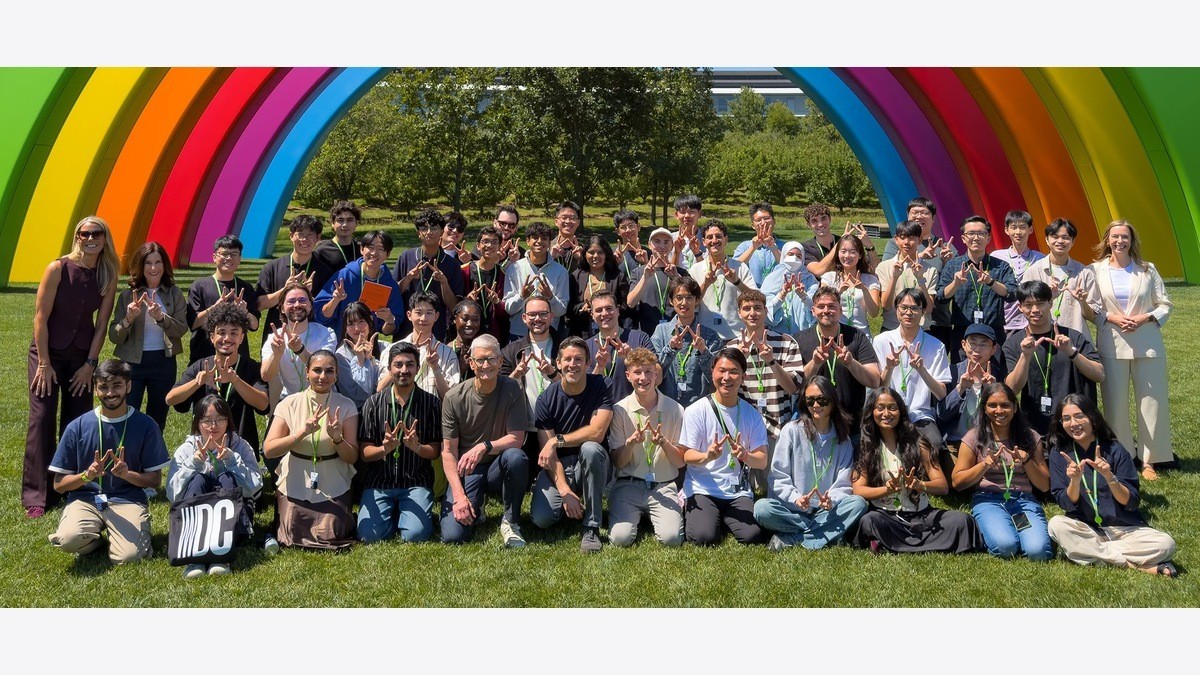
The entry window is February 8–28, 2027. November is preparation time. Apple’s rules already give a student enough information to rule out an unsuitable project or spot a dependency that could spoil an otherwise good demonstration.
What goes inside the ZIP
An entry can be an Xcode app or an app playground built in Swift Playground. The platform list is iOS, iPadOS, macOS, visionOS, tvOS and watchOS. Command-line tools and packages are among the Xcode project types that do not qualify.
Build with Xcode 27 or Swift Playground 4.7 or later. The submitted ZIP may be up to 500 MB, and the app’s content should be in English. Images, sounds and other resources must be included locally; Apple says the creation should not depend on a network connection.
Imagine a useful iPhone app whose first screen asks a judge to log into a remote service. Its most interesting feature may be unreachable during offline judging. A smaller app with local sample material could explain the same idea much more clearly. Test that question before filling the ZIP: disconnect the network and walk through the three-minute experience from its beginning. Do the controls, resources and central interaction still work?
The new platform choice helps here. A brief wrist interaction may make sense on watchOS, while an idea involving a larger workspace may belong on a Mac. Apple has widened the format; it has not asked every student to make a multiplatform product.
Who can enter
Read the eligibility page before investing months in the build. Apple excludes people employed full time as developers. The minimum age depends on country or region, ranging from 13 to 16. Applicants also need qualifying educational status, with routes for current students, some recent graduates and participants in a STEM organisation’s curriculum.
A free Apple developer registration can meet the registration requirement; paid Developer Program membership is another route. Check the conditions against your circumstances when you submit. The App Store’s age ratings describe who an app is suitable for, and should not be confused with the age rules for this student competition.
Entries must be individual work. Apple allows licensed open-source code and public-domain images or sounds when credited with an explanation of their use. It does not accept group projects.
Leave room for a rehearsal
Apple lists preparation sessions for December 10, January 14 and February 4, covering agentic coding in Xcode, Challenge preparation and an app’s story. The February session falls just before submissions open.
Winners receive a year of Developer Program membership and a gift; Distinguished Winners are invited to Cupertino. An entrant has no guarantee of either. What can be controlled now is the demonstration: one eligible app, its resources in the archive, and a short offline run that lets the judge see why it was made.